From One-Time Decor to Flexible Use
A exhibition show booth, conference room, or presentation space is often designed for a single specific occasion. The dimensions, colors, and message are perfectly tailored to that one moment. As soon as the location changes or a new campaign begins, a large portion of the setup may already be unusable.
By incorporating reusability into the design, you gain more flexibility. Think of modular structures, interchangeable visual panels, and components such as a shelf for your product or brochure that can be arranged in various configurations.
For example, a presentation wall can serve as a backdrop at one exhibition show and become part of a larger presentation setup at a subsequent event. By adjusting the visual communication, the backdrop, or the location, the same system takes on a new function or look.
The benefit goes beyond material savings. Preparation becomes simpler, because you don’t have to come up with a completely new solution every time.
The visitor experience begins with the first impression
Visitors have a lot of information to process at an event. They walk past booths, attend presentations, meet business contacts, and try to discover what’s relevant to them. In that environment, it’s important for a message to be instantly recognizable.
Visual communication plays a major role in this. Color, light, imagery, and spatial design all help determine what visitors look at and what information catches their attention. However, more visual communication does not automatically mean a better visitor experience. A space filled with messages can become overwhelming. The trick is to consciously choose what visitors should see first and what information they can discover afterward.
A practical question when designing an event space is: What should a visitor understand about your company, product, or event within the first few seconds? That answer forms the starting point for the layout, sightlines, and placement of visual elements. In this way, the decor becomes a functional part of the visitor experience.
Light and imagery as part of the design
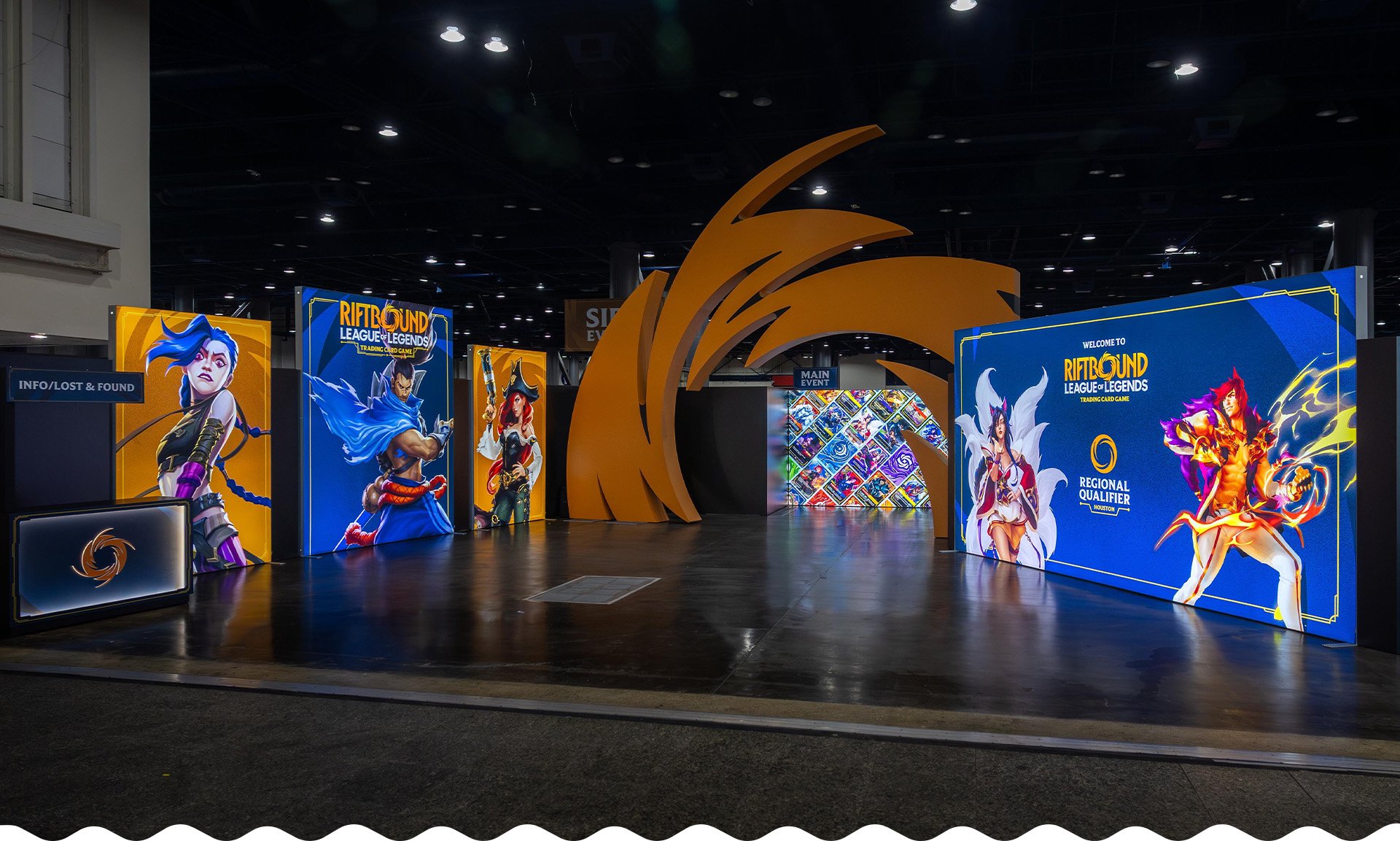
Light has a significant impact on how a space is experienced. It can highlight a focal point, make a brand recognizable, or create a specific atmosphere. A light box combined with printed textiles offers opportunities to make information clearly visible.
It’s wise to incorporate lighting and visuals right from the design phase. Where do visitors enter? From which direction will they view the presentation? Which elements need to stand out from a distance, and which are intended for visitors standing closer? Ensure a more cohesive final result.
Fewer surprises during setup
Anyone who has ever set up an exhibition booth or event space knows that plans on paper don’t always match reality. A part might not quite fit, materials might be missing, or setup might take longer than expected. Therefore, consider structures that are easy to assemble, parts that can be packed logically, and materials that can be put in place without complicated steps.
Transportation also plays a role. How much space do the materials take up? Are they well protected? Can parts be moved by one or two people? Is there enough space on site to unpack and set everything up? A few practical checks beforehand can save a lot of time and stress on the day of the event.
Organizing more sustainably starts with better choices
Sustainability in the events industry isn’t just about using recycled materials or reducing waste. The lifespan of materials and the way they’re used are also important.
A system that can be reused multiple times may be more attractive than a solution that’s written off after a single event. It’s wise to look beyond the initial purchase price. What is the cost of a solution over multiple events? Which components can be reused? What needs to be replaced when the message or brand identity changes?
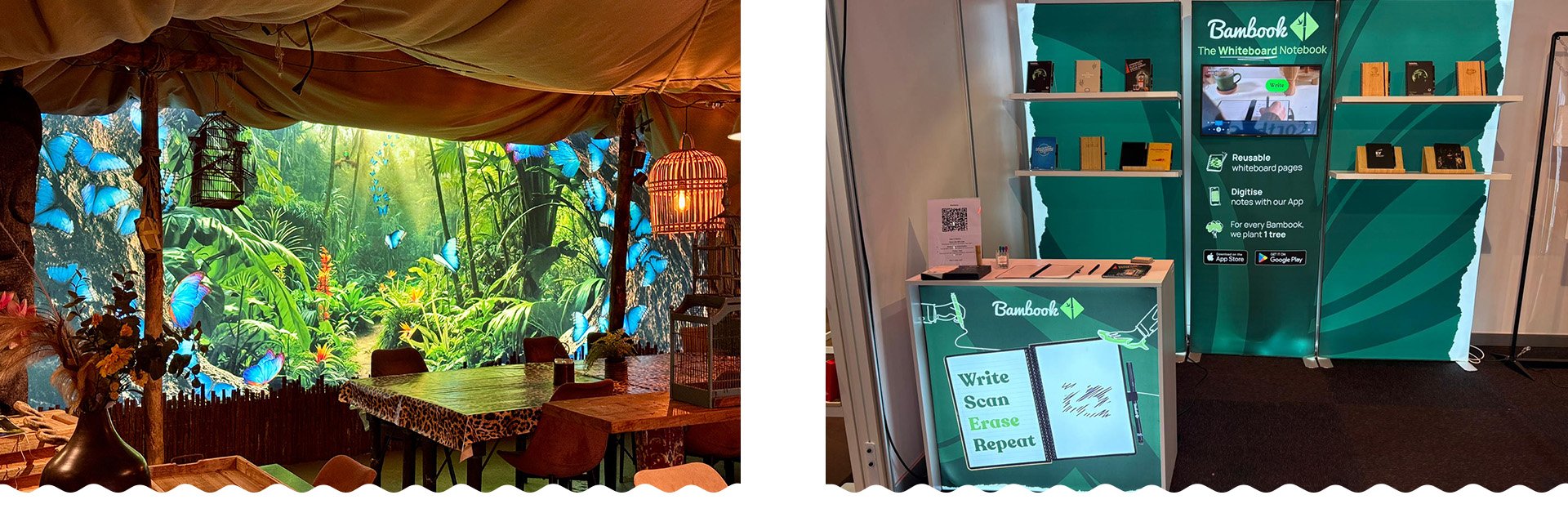
A modular design can help with this. Aluminum frames with interchangeable printed fabric panels, for example, are a way to retain a structure while adapting its visual design. These portable display systems with protective packaging can be a good option when the same organization regularly sets up at different locations.
Technology should make the work easier
Innovation is valuable when it solves a practical problem. In the events industry, this doesn’t always mean adding more technology. Sometimes the greatest improvement lies precisely in a simpler assembly process, a lighter structure, or a presentation solution that can be used without complicated installation. Perhaps a TV playing a short video could be mounted on the existing structure.
That requires a different way of thinking. It’s not just about: What do we want to show? But also: how many steps are required, how many people are involved, and what happens if the setup needs to be moved somewhere else the next day? By answering these questions together with designers, suppliers, booth builders, and organizers, we can develop solutions that are both visually appealing and practically feasible.
Design for the Future
Ultimately, a successful event is about more than just how it looks on opening day. It’s about the entire process: from the initial design and production to transportation, assembly, use, and reuse.
Those who take all these steps into account make more informed choices. The presentation becomes clearer, the setup more predictable, and the materials may have a longer lifespan.
The next time you design a exhibition show booth, conference, or event, ask yourself three questions:
• What should the visitor experience or remember?
• How can we simplify the setup and logistics?
• Which components can we reuse at a future event?
It is precisely in the answers to these questions that opportunities lie for organizing events more intelligently. Ultimately, a strong design is all about making a good impression without adding unnecessary complexity.
Written by: Yentl America


